Buy bloggingsmostwanted.com ?
We are moving the project
bloggingsmostwanted.com .
Are you interested in purchasing the domain
bloggingsmostwanted.com ?
domain@kv-gmbh.de · 0541-91531010
Buy bloggingsmostwanted.com ?
What is Thomas Hobbes' concept of human nature?
Thomas Hobbes' concept of human nature is that humans are inherently self-interested and driven by a desire for power and self-preservation. He believed that in a state of nature, without a governing authority, humans would be in a constant state of conflict and competition. Hobbes argued that to avoid this chaotic state, individuals would enter into a social contract and create a sovereign authority to maintain order and prevent the "war of all against all." **
What is the education of Hobbes and Rousseau?
Thomas Hobbes was largely self-taught and did not have a formal university education. He was well-read in classics, history, and philosophy. Jean-Jacques Rousseau, on the other hand, received a formal education and attended a seminary school. He later studied music and philosophy, which greatly influenced his ideas on education and society. **
Similar search terms for Hobbes Politics
Top-Angebote
Products related to Hobbes Politics:
-
Faber Fintan O'Toole, Up the Republic! (Economic Book, Politics Book)Fintan O'Toole, Up the Republic! (Economic Book, Politics Book) In this important book, historians, lawyers, economists and writers come together to put a coherent case: that although the Irish economic collapse has resulted in national humiliation, renewed emigration and a decline in living standards for the majority of the population, there is still hope that the country can be reformed and renewed. Irish politicians offered the now notorious blanket guarantee to all the banks which had got in over their heads during the great property bubble - including one that had become little more than a criminal enterprise. A different set of politicians grimly enforces the consequences of that guarantee, locking an entire generation of Irish men and women into paying for the mistakes of greedy bankers and their corrupt friends in government. The energy of hope has to come from elsewhere. These essays demonstrate how simple measures and different economic and social policies could release that energy and fulfil the promise of an educated, literate and culturally vibrant people.4,99 £*Shipping: 1,99 £Secure redirect to the provider
-
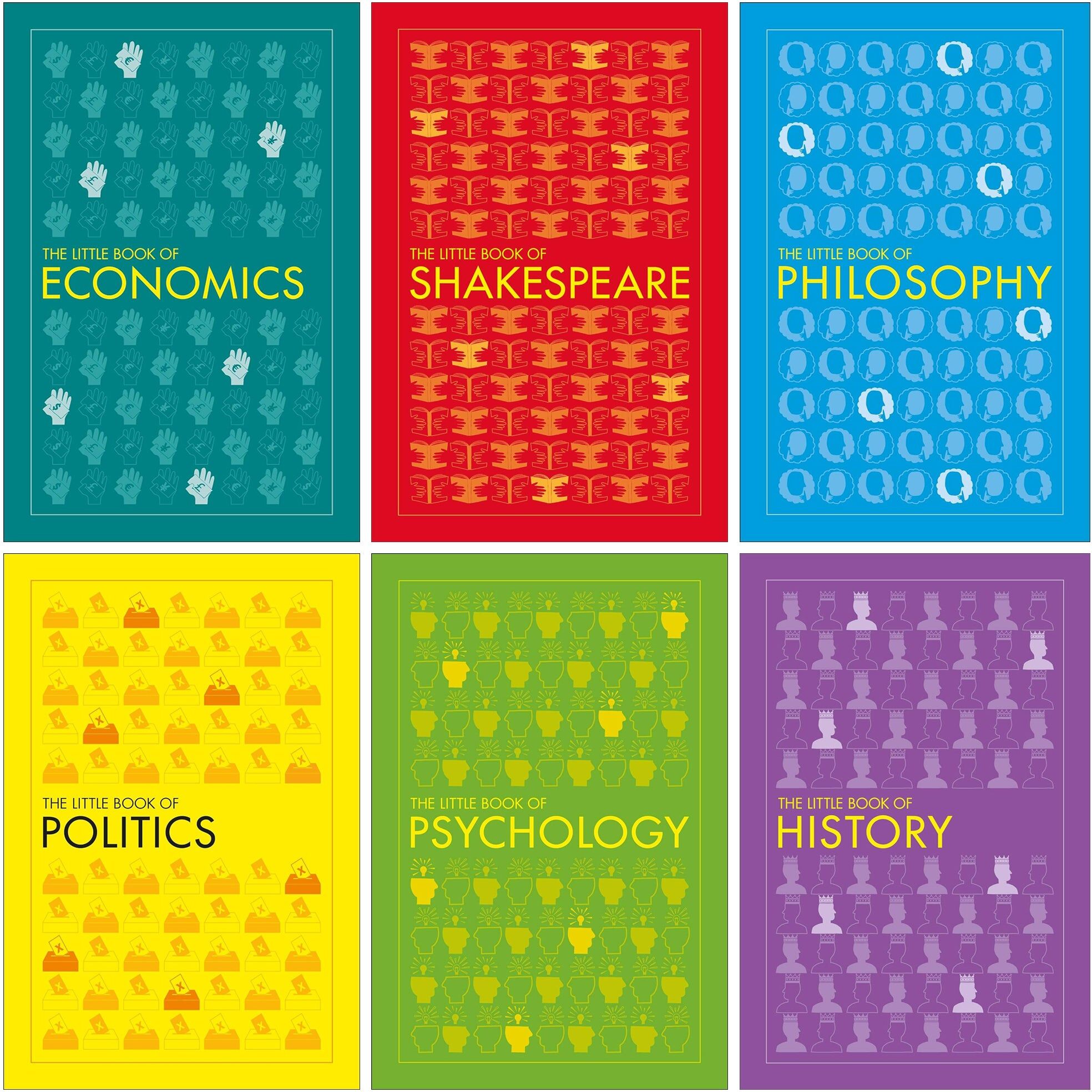
DK The Little Book Of Series 6 Books Collection Set (Economics, Politics, Shakespeare, Philosophy, Psychology, History)The Little Book Of Economics From the earliest forms of currency to the Industrial Revolution, and from the birth of the stock market to free-market capitalism and globalized trade, The Little Book of Economics brings economic theory and the work of key economists to life. Journeying through centuries of economic thought, it is the perfect pocket-sized guide to the subject. The Little Book Of Politics From the origins of democracy to Machiavelli's cunning statecraft, and from Rousseau's "social contract" to the American Declaration of Independence, Marxist communism, the dawn of populism, and identity politics, The Little Book of Politics examines the philosophies behind the different political beliefs and methods of government used around the world over the course of human history. The Little Book Of Shakespeare This bold book covers every work, from the comedies of Twelfth Night and As You Like It to the tragedies of Julius Caesar and Hamlet, plus lost plays and less well-known works of poetry. Easy-to-understand graphics and illustrations bring the themes, plots, characters and language of Shakespeare to life, including illustrated timelines which offer an at-a-glance summary of the action for each play. With detailed plot summaries and an in-depth analysis of the major characters and themes, this is a brilliant, innovative exploration of the entire canon of Shakespeare plays, sonnets and poetry. The Little Book Of Philosophy To the complete novice learning about philosophy can be daunting - The Little Book of Philosophy changes all that. With the use of powerful and easy-to-follow images, famous quotations, and explanations that are easily understandable, this book cuts through any misunderstandings to demystify the subject. The Little Book Of Psychology DK's The Little Book of Psychology answers all these questions and provides an insight into this fascinating field of science. Whether you are a student, an expert, a novice, or have a general interest in the human mind, this portable guide is the perfect choice to start exploring and understanding psychology. The Little Book Of History The Little Book of History charts world history from the dawn of civilisation to the modern culture we live in today. From the origins of homo-sapiens to the release of Nelson Mandela, from the French Revolution to the Space Race, The Little Book of History is a stunning exploration of the human timeline up to and including modern Islam, the world wide web, and the global financial crisis.14,99 £*Shipping: 2,99 £Secure redirect to the provider
-
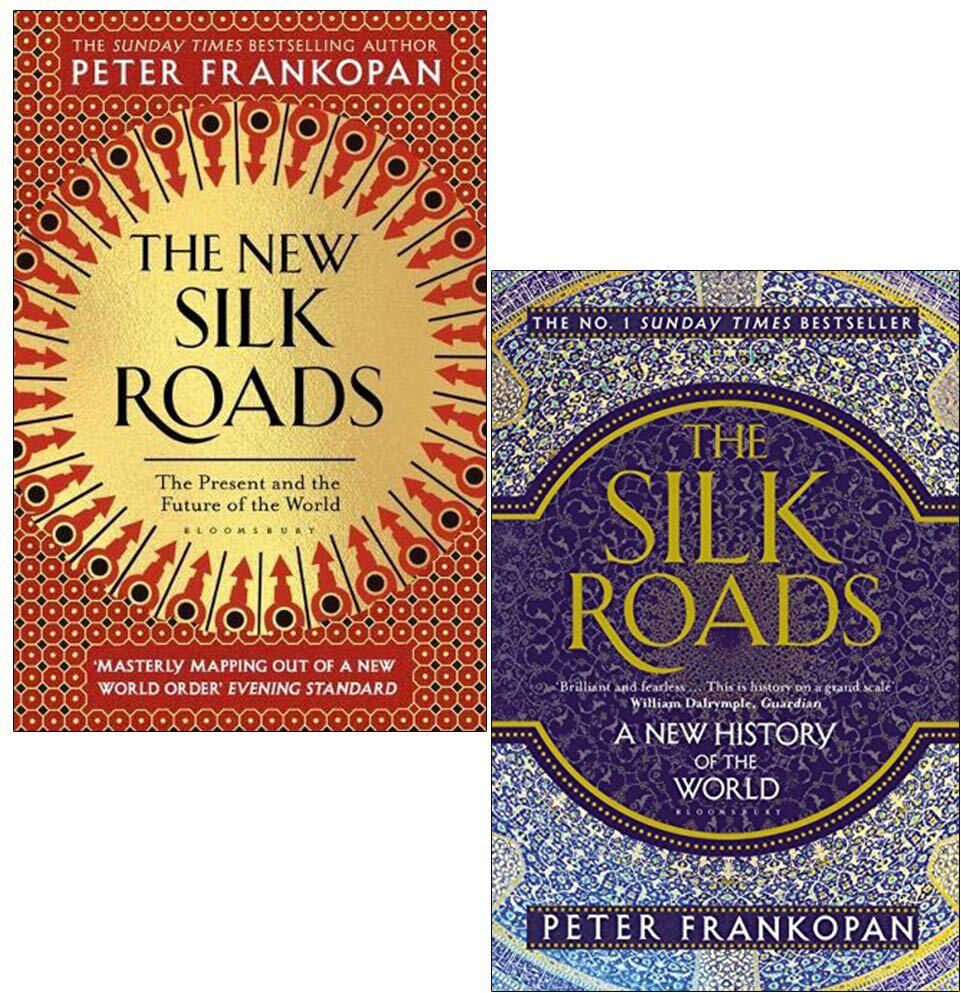
Bloomsbury Publishing The Silk Roads & The New Silk Roads 2 Book Set by Peter Frankopan – History & Global Politics CollectionThe New Silk Roads The Present and Future of the World The New Silk Roads takes a fresh look at the relationships being formed along the length and breadth of the ancient trade routes today. The world is changing dramatically and in an age of Brexit and Trump; the themes of isolation and fragmentation permeating the western world stand in sharp contrast to events along the Silk Roads; where ties are being strengthened and mutual cooperation established.This prescient contemporary history provides a timely reminder that we live in a world that is profoundly interconnected. The Silk Roads: A New History of the World For centuries; fame and fortune were to be found in the west in the New World of the Americas. Today; it is the east which calls out to those in search of riches and adventure. Sweeping right across Central Asia and deep into China and India; a region that once took centre stage is again rising to dominate global politics; commerce and culture.16,98 £*Shipping: 2,99 £Secure redirect to the provider
-
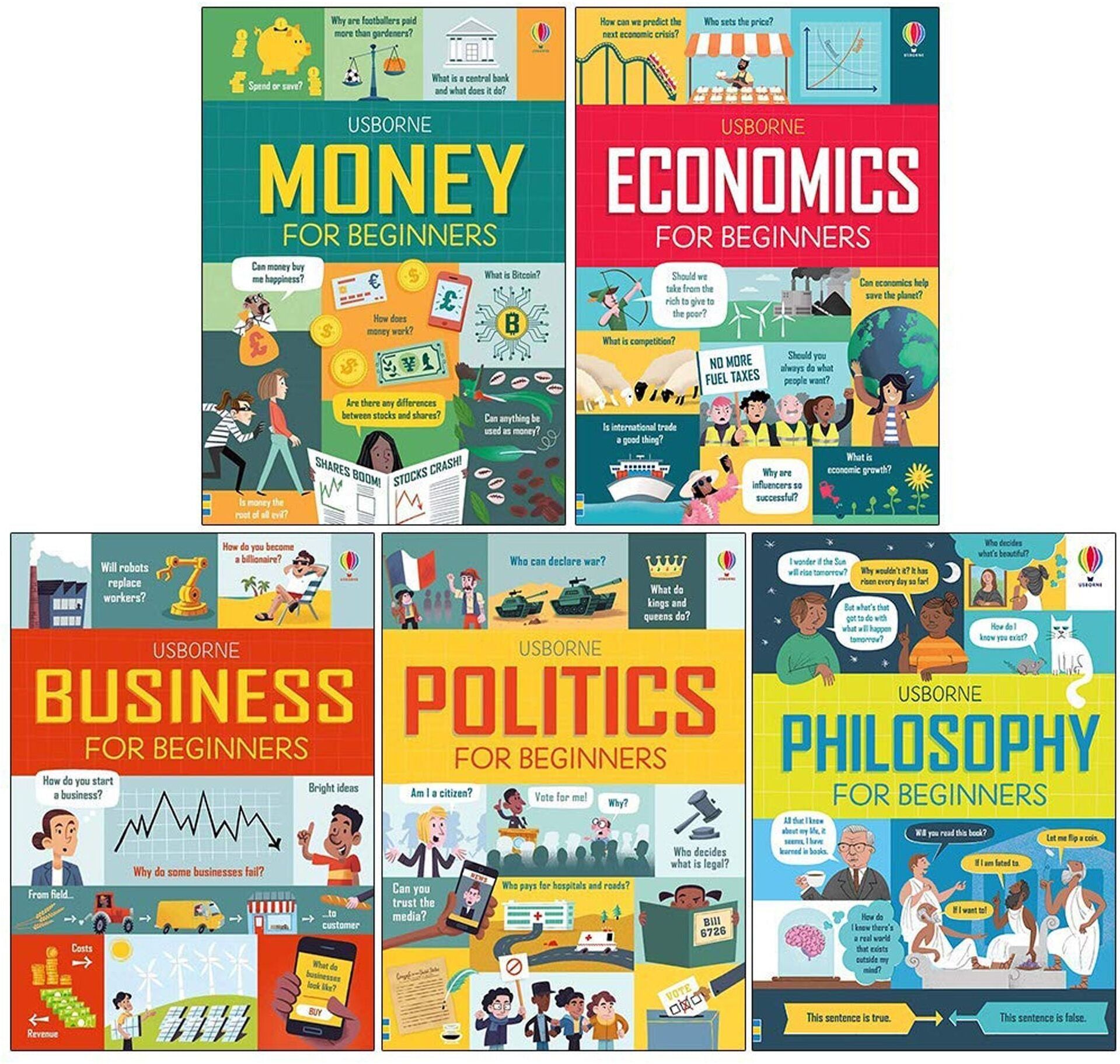
Usborne Big Subjects for Beginners 5 Books Collection Box Set Money, Economics, Business, Politics & Philosophy – Illustrated Educational Learning GHelp children understand the world around them with the Usborne Big Subjects for Beginners – 5 Books Collection Box Set, a beautifully illustrated introduction to some of the most important topics in modern life. Each book breaks down complex ideas into simple, engaging explanations perfect for kids, beginners, and curious young minds.Packed with colourful diagrams, friendly illustrations, quick facts, and clear examples, this set helps young readers explore big ideas with confidence. This educational collection includes: Money for Beginners – Understanding money, saving, spending, and how currency works. Economics for Beginners – Supply, demand, trade, markets, and how economies function. Business for Beginners – How businesses start, operate, grow, and succeed. Politics for Beginners – Governments, elections, laws, democracy, and world politics explained. Philosophy for Beginners – Big questions about life, knowledge, ethics, and thinking skills. Perfect for ages 9–14, home learning, school topics, and young readers who love discovering new knowledge. Related Tags: Usborne, Usbourne Books19,99 £*Shipping: 2,99 £Secure redirect to the provider
-
What is a quote from Hobbes about ethics?
One of Hobbes' famous quotes about ethics is "the life of man, solitary, poor, nasty, brutish, and short." This quote reflects Hobbes' belief that without a strong central authority to enforce moral and ethical behavior, human life would be characterized by chaos and conflict. It emphasizes the importance of social order and the role of government in maintaining ethical standards within society. **
-
What is the difference between Hobbes and Rousseau?
The main difference between Hobbes and Rousseau lies in their views on human nature and the role of the state. Hobbes believed that humans are inherently selfish and competitive, and therefore require a strong central authority to maintain order and prevent chaos. In contrast, Rousseau believed that humans are inherently good and cooperative, and that the state should exist to protect individual freedom and promote the common good. Additionally, Hobbes advocated for an absolute monarchy, while Rousseau favored a more democratic form of government based on the general will of the people. **
-
Does anyone understand this quote by Thomas Hobbes?
The quote by Thomas Hobbes, "The condition of man... is a condition of war of everyone against everyone," reflects his belief in the inherently competitive and conflict-driven nature of human beings. Hobbes argued that in the absence of a strong central authority, individuals would constantly be in conflict with one another, leading to a state of perpetual war. This quote is often interpreted as a commentary on the need for a powerful government to maintain order and prevent chaos. Overall, the quote captures Hobbes' pessimistic view of human nature and his emphasis on the importance of a strong social contract to prevent societal breakdown. **
-
What are the educational philosophies of Hobbes and Rousseau?
Hobbes believed in a strict and authoritarian approach to education, emphasizing the need for a strong central authority to instill discipline and order in society. He believed that education should focus on obedience to authority and the importance of social order. In contrast, Rousseau believed in a more natural and child-centered approach to education, emphasizing the importance of allowing children to develop freely and according to their own interests and abilities. He believed that education should be tailored to the individual needs of each child and should focus on nurturing their natural talents and abilities. **

What does Locke and Hobbes' social contract theory state?
Locke and Hobbes' social contract theory both propose that individuals enter into a social contract with the government to maintain order and protect their rights. Hobbes believed that people give up some of their freedoms to a sovereign ruler in exchange for protection and security, while Locke argued that individuals form a government to protect their natural rights to life, liberty, and property. Both theories emphasize the importance of a mutual agreement between the government and its citizens to ensure a stable and just society. **
What is the connection between Thomas Hobbes and Leviathan?
Thomas Hobbes is the author of the political philosophy book "Leviathan," which he published in 1651. In this book, Hobbes discusses his views on the social contract theory and the role of government in maintaining order and preventing chaos. The connection between Thomas Hobbes and Leviathan is that the book serves as a metaphor for the all-powerful government that is needed to control and regulate society, much like the biblical sea monster Leviathan symbolizes a powerful and uncontrollable force. **
Top-Angebote
Products related to Hobbes Politics:
-
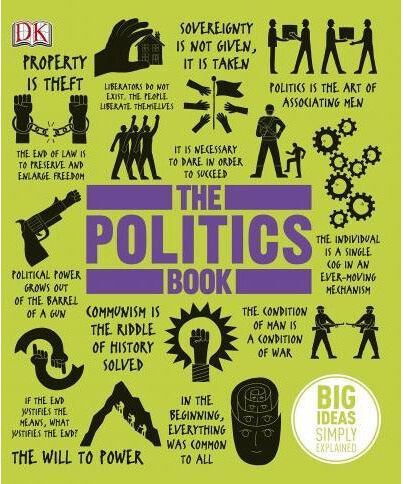
DK The Politics Book - Big Ideas Simply ExplainedThis invaluable; easy-to-understand guide to world politics and government offers an accessible introduction to more than 80 of the most important theories and big ideas of leaders and politicians throughout history. The Politics Book makes government and politics easy to understand by explaining the big ideas simply; using clear language supported by eye-catching graphics. The key events in political history are outlined from the origins of political thinking by Confucius and Aristotle to modern-day activists such as Martin Luther King and Nelson Mandela. Helpful mind maps break down their important concepts into bitesize chunks to make the subject accessible to students of politics and anyone with an interest in how government works. A handy reference section also provides a glossary of key terms and a directory of significant political figures. Filled with thought-provoking quotes from great political thinkers such as Nietzsche; Malcolm X; Karl Marx; and Mao Zedong; The Politics Book gives context to the world of government and power.12,99 £*Shipping: 2,99 £Secure redirect to the provider
-
The Little Book of Politics (DK Big Ideas Series)This politics book is the perfect pocket-sized introduction to politics ideas and political thought throughout history. From the origins of democracy to Machiavelli's cunning statecraft, and from Rousseau's "social contract" to the American Declaration of Independence, Marxist communism, the dawn of populism, and identity politics, The Little Book of Politics examines the philosophies behind the different political beliefs and methods of government used around the world over the course of human history. Packed with diagrams and flowcharts that explain complex concepts in a simple but exciting way, this introduction to politics offers you a combination of clear text and hard-working diagrams in a portable format that is perfect for reading on the go.5,99 £*Shipping: 2,99 £Secure redirect to the provider
-
Faber Fintan O'Toole, Up the Republic! (Economic Book, Politics Book)Fintan O'Toole, Up the Republic! (Economic Book, Politics Book) In this important book, historians, lawyers, economists and writers come together to put a coherent case: that although the Irish economic collapse has resulted in national humiliation, renewed emigration and a decline in living standards for the majority of the population, there is still hope that the country can be reformed and renewed. Irish politicians offered the now notorious blanket guarantee to all the banks which had got in over their heads during the great property bubble - including one that had become little more than a criminal enterprise. A different set of politicians grimly enforces the consequences of that guarantee, locking an entire generation of Irish men and women into paying for the mistakes of greedy bankers and their corrupt friends in government. The energy of hope has to come from elsewhere. These essays demonstrate how simple measures and different economic and social policies could release that energy and fulfil the promise of an educated, literate and culturally vibrant people.4,99 £*Shipping: 1,99 £Secure redirect to the provider
-
DK The Little Book Of Series 6 Books Collection Set (Economics, Politics, Shakespeare, Philosophy, Psychology, History)The Little Book Of Economics From the earliest forms of currency to the Industrial Revolution, and from the birth of the stock market to free-market capitalism and globalized trade, The Little Book of Economics brings economic theory and the work of key economists to life. Journeying through centuries of economic thought, it is the perfect pocket-sized guide to the subject. The Little Book Of Politics From the origins of democracy to Machiavelli's cunning statecraft, and from Rousseau's "social contract" to the American Declaration of Independence, Marxist communism, the dawn of populism, and identity politics, The Little Book of Politics examines the philosophies behind the different political beliefs and methods of government used around the world over the course of human history. The Little Book Of Shakespeare This bold book covers every work, from the comedies of Twelfth Night and As You Like It to the tragedies of Julius Caesar and Hamlet, plus lost plays and less well-known works of poetry. Easy-to-understand graphics and illustrations bring the themes, plots, characters and language of Shakespeare to life, including illustrated timelines which offer an at-a-glance summary of the action for each play. With detailed plot summaries and an in-depth analysis of the major characters and themes, this is a brilliant, innovative exploration of the entire canon of Shakespeare plays, sonnets and poetry. The Little Book Of Philosophy To the complete novice learning about philosophy can be daunting - The Little Book of Philosophy changes all that. With the use of powerful and easy-to-follow images, famous quotations, and explanations that are easily understandable, this book cuts through any misunderstandings to demystify the subject. The Little Book Of Psychology DK's The Little Book of Psychology answers all these questions and provides an insight into this fascinating field of science. Whether you are a student, an expert, a novice, or have a general interest in the human mind, this portable guide is the perfect choice to start exploring and understanding psychology. The Little Book Of History The Little Book of History charts world history from the dawn of civilisation to the modern culture we live in today. From the origins of homo-sapiens to the release of Nelson Mandela, from the French Revolution to the Space Race, The Little Book of History is a stunning exploration of the human timeline up to and including modern Islam, the world wide web, and the global financial crisis.14,99 £*Shipping: 2,99 £Secure redirect to the provider
-
What is Thomas Hobbes' concept of human nature?
Thomas Hobbes' concept of human nature is that humans are inherently self-interested and driven by a desire for power and self-preservation. He believed that in a state of nature, without a governing authority, humans would be in a constant state of conflict and competition. Hobbes argued that to avoid this chaotic state, individuals would enter into a social contract and create a sovereign authority to maintain order and prevent the "war of all against all." **
-
What is the education of Hobbes and Rousseau?
Thomas Hobbes was largely self-taught and did not have a formal university education. He was well-read in classics, history, and philosophy. Jean-Jacques Rousseau, on the other hand, received a formal education and attended a seminary school. He later studied music and philosophy, which greatly influenced his ideas on education and society. **
-
What is a quote from Hobbes about ethics?
One of Hobbes' famous quotes about ethics is "the life of man, solitary, poor, nasty, brutish, and short." This quote reflects Hobbes' belief that without a strong central authority to enforce moral and ethical behavior, human life would be characterized by chaos and conflict. It emphasizes the importance of social order and the role of government in maintaining ethical standards within society. **
-
What is the difference between Hobbes and Rousseau?
The main difference between Hobbes and Rousseau lies in their views on human nature and the role of the state. Hobbes believed that humans are inherently selfish and competitive, and therefore require a strong central authority to maintain order and prevent chaos. In contrast, Rousseau believed that humans are inherently good and cooperative, and that the state should exist to protect individual freedom and promote the common good. Additionally, Hobbes advocated for an absolute monarchy, while Rousseau favored a more democratic form of government based on the general will of the people. **
Similar search terms for Hobbes Politics
-
Bloomsbury Publishing The Silk Roads & The New Silk Roads 2 Book Set by Peter Frankopan – History & Global Politics CollectionThe New Silk Roads The Present and Future of the World The New Silk Roads takes a fresh look at the relationships being formed along the length and breadth of the ancient trade routes today. The world is changing dramatically and in an age of Brexit and Trump; the themes of isolation and fragmentation permeating the western world stand in sharp contrast to events along the Silk Roads; where ties are being strengthened and mutual cooperation established.This prescient contemporary history provides a timely reminder that we live in a world that is profoundly interconnected. The Silk Roads: A New History of the World For centuries; fame and fortune were to be found in the west in the New World of the Americas. Today; it is the east which calls out to those in search of riches and adventure. Sweeping right across Central Asia and deep into China and India; a region that once took centre stage is again rising to dominate global politics; commerce and culture.16,98 £*Shipping: 2,99 £Secure redirect to the provider
-
Usborne Big Subjects for Beginners 5 Books Collection Box Set Money, Economics, Business, Politics & Philosophy – Illustrated Educational Learning GHelp children understand the world around them with the Usborne Big Subjects for Beginners – 5 Books Collection Box Set, a beautifully illustrated introduction to some of the most important topics in modern life. Each book breaks down complex ideas into simple, engaging explanations perfect for kids, beginners, and curious young minds.Packed with colourful diagrams, friendly illustrations, quick facts, and clear examples, this set helps young readers explore big ideas with confidence. This educational collection includes: Money for Beginners – Understanding money, saving, spending, and how currency works. Economics for Beginners – Supply, demand, trade, markets, and how economies function. Business for Beginners – How businesses start, operate, grow, and succeed. Politics for Beginners – Governments, elections, laws, democracy, and world politics explained. Philosophy for Beginners – Big questions about life, knowledge, ethics, and thinking skills. Perfect for ages 9–14, home learning, school topics, and young readers who love discovering new knowledge. Related Tags: Usborne, Usbourne Books19,99 £*Shipping: 2,99 £Secure redirect to the provider
-
Bloomsbury Publishing The New Silk Roads by Peter Frankopan – The Present and Future of the World Global Politics BestsellerThe New Silk Roads takes a fresh look at the relationships being formed along the length and breadth of the ancient trade routes today. The world is changing dramatically and in an age of Brexit and Trump; the themes of isolation and fragmentation permeating the western world stand in sharp contrast to events along the Silk Roads; where ties are being strengthened and mutual cooperation established. The New Silk Roads asks us to re-examine who we are and where we stand in the world; illuminating the themes on which all our lives and livelihoods depend.6,99 £*Shipping: 2,99 £Secure redirect to the provider
-
Elliott & Thompson The Future of Geography: How Power and Politics in Space Will Change Our World By Tim MarshallSpy satellites orbiting the Moon. Space metals worth billions. Humans on Mars within our lifetimes. This isn’t science fiction. It’s astropolitics. We’re entering a new space race – and it could revolutionise life on Earth. Space: the new frontier, a wild and lawless place. It is already central to communication, economics, military strategy and international relations on Earth. Now, it is the latest arena for human exploration, exploitation – and, possibly, conquest. We’re heading up and out, and we’re taking our power struggles with us. China, the USA and Russia are leading the way. From physical territory and resources to satellites, weaponry and strategic choke points, geopolitics is as important in the skies above us as it is down below. If you’ve ever wondered if humans are going back to the Moon, who will benefit from exploration or what space wars might look like, the answers are here. With all the insight and wit that have made Tim Marshall the UK’s most popular writer on geopolitics, this gripping book shows how we got here and where we’re going, covering great-power rivalry; technology; commerce; combat in space; and what it means for all of us down here on Earth. This is essential reading on power, politics and the future of humanity.7,99 £*Shipping: 2,99 £Secure redirect to the provider
-
Does anyone understand this quote by Thomas Hobbes?
The quote by Thomas Hobbes, "The condition of man... is a condition of war of everyone against everyone," reflects his belief in the inherently competitive and conflict-driven nature of human beings. Hobbes argued that in the absence of a strong central authority, individuals would constantly be in conflict with one another, leading to a state of perpetual war. This quote is often interpreted as a commentary on the need for a powerful government to maintain order and prevent chaos. Overall, the quote captures Hobbes' pessimistic view of human nature and his emphasis on the importance of a strong social contract to prevent societal breakdown. **
-
What are the educational philosophies of Hobbes and Rousseau?
Hobbes believed in a strict and authoritarian approach to education, emphasizing the need for a strong central authority to instill discipline and order in society. He believed that education should focus on obedience to authority and the importance of social order. In contrast, Rousseau believed in a more natural and child-centered approach to education, emphasizing the importance of allowing children to develop freely and according to their own interests and abilities. He believed that education should be tailored to the individual needs of each child and should focus on nurturing their natural talents and abilities. **
-
What does Locke and Hobbes' social contract theory state?
Locke and Hobbes' social contract theory both propose that individuals enter into a social contract with the government to maintain order and protect their rights. Hobbes believed that people give up some of their freedoms to a sovereign ruler in exchange for protection and security, while Locke argued that individuals form a government to protect their natural rights to life, liberty, and property. Both theories emphasize the importance of a mutual agreement between the government and its citizens to ensure a stable and just society. **
-
What is the connection between Thomas Hobbes and Leviathan?
Thomas Hobbes is the author of the political philosophy book "Leviathan," which he published in 1651. In this book, Hobbes discusses his views on the social contract theory and the role of government in maintaining order and preventing chaos. The connection between Thomas Hobbes and Leviathan is that the book serves as a metaphor for the all-powerful government that is needed to control and regulate society, much like the biblical sea monster Leviathan symbolizes a powerful and uncontrollable force. **
* All prices are inclusive of VAT and, if applicable, plus shipping costs. The offer information is based on the details provided by the respective shop and is updated through automated processes. Real-time updates do not occur, so deviations can occur in individual cases. ** Note: Parts of this content were created by AI.